


What Is Bagasse Lunch Box
Bagasse Lunch Box is perfect for holding hot or cold food. Fully compostable. Bagasse is a 100% plant based material made from reclaimed sugarcane waste fibres. Bagasse is fully sustainable, renewable and compostable as it can be easily obtained after each sugarcane harvest.
Why choose us
Continuous strong supply capacity
Zhuli Intelligent Control Co., Ltd has two fully intelligent production lines with total 20sets of intelligent production equipments, greatly saving labor costs and improving production efficiency.
Customers first service idea
Our service runs throughout the whole production process from the pre-sales, product design, production and after-sales.
Rich Experience
Own mold making department, strong research and development team, providing technical support, troubleshooting, and maintenance services.
One-stop Solution
We are factory, any problems that occur will be quickly shared with the team and solved.

Bagasse Takeaway Clamshell Box
The capacity of the 6.5 inch bagasse takeaway box is five hundred milliliter(450ml). The bagasse takeaway food box is overall round and smooth, with a comfortable touch.
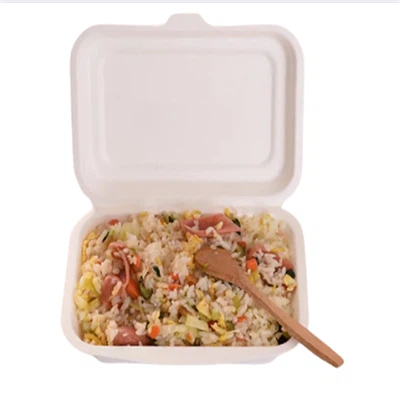
The capacity of the bagasse hinged box is 4.5 hundred milliliter(450ml). The bagasse hinged box has dense embossing on its appearance, which make it firm and substantial.

The capacity of the bagasse lunch box is about five hundred milliter(500ml). As a natural fiber material, the 8 inch bagasse lunch box is also can be called as flip top hoolodegradable box.

The weight of the bagasse rectangle box is about 30g. The specifications of the product is about 308*229*34mm, and its close size is about 229*154*76mm.

The close size of the XXL 6 inch bagasse burger box is about 152*159*76mm. The bagasse burger box has a embossed design, which gives it an outstanding texture.
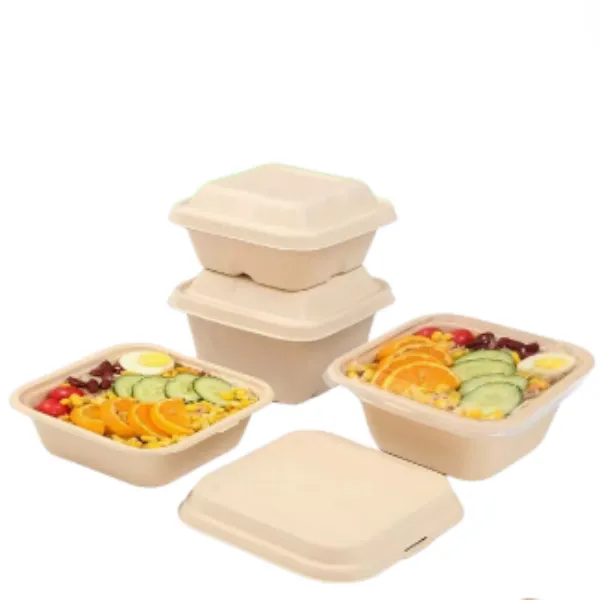
As a kind of fiber material, bagasse has excellent compressive properties. The 9 inch bagasse flip-open square box can provide food reliable protection against squeezing, cracking or contamination during transport and storage.
Biodegradable and Compostable
One of the key benefits of Bagasse Lunch Box is their biodegradability and compostability. Unlike plastic, which can take centuries to break down, bagasse decomposes within a matter of weeks in a compost pile. This means that when you dispose of bagasse containers, you are contributing to nutrient-rich soil rather than clogging up landfills or polluting the oceans.
Renewable Resource
Sugarcane and bamboo, the primary sources of bagasse, are fast-growing, renewable resources. This makes bagasse an abundant and sustainable material for food packaging. The cultivation of sugarcane and bamboo also has a lower environmental impact compared to the extraction and production of petroleum-based plastics.
Sturdy and Versatile
Bagasse Lunch Box are not just eco-friendly; they are also practical. These containers are sturdy and can withstand hot and cold temperatures, making them suitable for a wide range of food items, from hot soups to cold salads. Bagasse is a versatile material that can be molded into various shapes and sizes, ensuring that it meets the diverse needs of the food industry.
Reduced Carbon Footprint
Using Bagasse Lunch Box can significantly reduce a restaurant's carbon footprint. The entire lifecycle of these containers, from production to disposal, generates fewer greenhouse gas emissions compared to plastic or foam alternatives. By making the switch to bagasse, businesses can align with eco-conscious consumers' values and reduce their impact on the planet.
The future of takeout and delivery
The popularity of takeout and delivery services shows no signs of slowing down. As a result, the packaging choices made by food establishments play a crucial role in mitigating the environmental impact of these services. Bagasse food boxes offer a sustainable solution that can revolutionize the takeout and delivery industry, allowing businesses to provide a convenient service without compromising on their commitment to the planet.
The Characteristics and Value of Sugarcane Bagasse Lunch Box
The standard of living is developing at a high speed, and the speed of our life is getting faster and faster. Various fast food restaurants stand on the streets. However, such fast food may have a negative impact on the environment. These food packaging materials are usually single-use and thrown away after use. In this way, materials such as plastics and foams gradually accumulate, which is harmful to the environment. In order to solve this problem, many cities have begun to promote the "green reuse" of lunch boxes.
In some cities, bagasse pallets have become a new type of environmentally friendly packaging material. In recent years, bagasse-packed disposable lunch boxes have been widely used, and basically everyone knows about bagasse lunch boxes, but many people are still unclear about their characteristics and value.
The bagasse lunch box is made of natural material, which is an eco-friendly, healthy and sustainable material. Compared with traditional plastic lunch boxes, bagasse products are non-toxic and harmless, and will not pollute the environment. These lunch boxes have a flat surface, cannot be broken, can withstand high temperatures (hot water or hot air), and are very practical disposable lunch boxes.
The bagasse lunch box can be recycled after use and will not pollute the environment. This is one of the biggest advantages. The bagasse lunch box can be deeply restored to generate secondary processed materials. This makes bagasse products more environmentally friendly, making them more suitable for the requirements of modern society when environmental issues are getting more and more attention.
Bagasse tableware are an environmentally friendly, healthy and sustainable material. Compared with traditional plastic tableware, they will not cause pollution and have strong antibacterial ability, which make them an environmentally friendly material needed by modern society and an essential accessory for us to build a green and low-carbon ecology. When we use the sugarcane lunch boxes, we should not only consider environmental issues, but also human health and future sustainability. By choosing bagasse tableware, you can not only enjoy the delicious breakfast, but also contribute to the environment, health, and sustainable development.
Invest in Biodegradable Sugarcane Bagasse Lunch Box for More Green


Did you know that biodegradable sugarcane bagasse lunch box and compostable disposable product is more energy efficient than disposable plastic? The materials used for biodegradable cutlery are renewable, so they don't deplete the planet's natural resources. If that's not enough, biodegradable manufacturers are paying more attention to their carbon footprints and may take steps to reduce the greenhouse gases they produce. Using biodegradable bagasse lunch box will also reduce your carbon footprint.
Key features of bagasse lunch box
Catering businesses are becoming aware of the environmental impact of hazardous substances and have started using bagasse containers.
Renewable and compostable
Bagasse lunch box is a sustainable product because its source has a low impact on the environment. It can be easily replenished as sugar cane can be harvested for many years at a time.
Bagasse is completely natural and biodegradable, bagasse can biodegrade normally within 90 days, and when it degrades into the soil, it produces a fertilizer that nourishes the soil instead of harming it. This is different from its plastic counterpart, which takes millions of years.
Easier to obtain
Bagasse is the pulpy residue left after the juice is extracted from sugar cane. For every ton of sugar cane produced, 2-3 tons of bagasse can be produced. Bagasse is rich in cellulose and less in lignin, so bagasse has great advantages as a fiber raw material. Bagasse is readily available as sugarcane crops are prevalent in several countries and sugarcane is a perennial plant that can be harvested up to 7-8 times. Bagasse used to be considered waste, and burning in the fields caused pollution. However, scientific advances have helped to identify multiple uses for this material. Bagasse is rich in cellulose and less in lignin, so bagasse has great advantages as a fiber raw material.
Benefits of Bagasse Lunch Boxes
The environmentally conscious public and the food service industry are increasingly turning to biodegradable bagasse lunch boxes, and the properties of these containers make them ideal for food packaging.
Bagasse is heat-resistant and can hold hot food up to 95 degrees Celsius. Bagasse containers can be used to reheat food in the microwave. Due to its fibrous texture, bagasse containers are more durable and stronger than polystyrene containers and are used by several of the UK's leading online grocery shopping centres. Bagasse containers can be used to store food in the refrigerator until serving. They have longer lasting thermal properties than paper and plastic containers.
Bagasse lunch boxes are an eco-friendly alternative to plastic lunch boxes because they are fully compostable. Decomposition rates may vary with temperature, turnover and humidity. Faster breakdown can be achieved if the bagasse lunch box is divided into smaller pieces. Bagasse products can also be used to store cold food. Bagasse containers are water and grease resistant and are therefore increasingly used by wholesale soft drink suppliers. Due to the eco-friendly properties of bagasse containers, usage has exploded in the restaurant and hospitality industry. The robustness and superior thermal properties of bagasse containers also make them preferred by consumers over other disposable food containers and cutlery.
On the other hand, thankfully, biodegradable sugarcane bagasse lunch box requires minimal cleanup. All you need to do is put them in the compost bin to free yourself from the drudgery of doing the dishes. Additionally, these products degrade over time, releasing nutrients that are good for the planet back into the soil. Bring these renewable bagasses to life and you'll get more green.
Is on the cusp of economic uncertainty, and businesses, retail, the food industry, and many more are following the steps to become more eco-friendly. While other industries find different ways to become more sustainable, the food industry is developing new ways to join the revolution. For example, to cut down the use of plastic in the food and hospitality industry, bagasse containers are fa
Bagasse is made from sugarcane, a raw material widely available in many countries worldwide. As an emerging biodegradable packaging, bagasse has managed to hold the attention of many businesses, and the packaging also passes the standards of various food safety authorities. Moreover, since it is a fibrous left-over from the production of sugarcane, bagasse is helping people handle two problems – providing eco-friendly food packaging and reducing the waste of products that would otherwise be burnt and pollute the environment.
Features of Bagasse Material
As a raw by-product of sugarcane, bagasse packaging material has several vital features that are not found in other packaging materials:
Renewable
The sugarcane by-product used to make biodegradable food containers has a low amount of impact on the environment. Since there is no supply shortage of sugarcane, these packages can be made after every harvest. The sourcing of the bagasse material also has minimal impact on the environment, making it a perfect alternative for plastic and paper containers for food.
Compostable
It takes up to 400 years for plastic to degrade; styrofoam never degrades, which is why bagasse is replacing these two materials in the food and hospitality industry. Not only does bagasse has a minimal impact during packaging production, but it also requires only three months for bagasse to degrade. Furthermore, even degrading, it does not impact the quality of the soil like plastic or styrofoam would.
Availability
While paper containers might be easily available, there is still a gap between demand and supply. It is not the same with bagasse containers, as the raw material to produce these eco-friendly disposable food containers is widely available in any part of the world.
Benefits of Using Bagasse Material as the Ideal Choice for Eco-Friendly Packaging
With the increasing concern about the eco-friendliness of the products used in the food and hospitality industry, businesses and customers are shifting to more viable options. Bagasse materials in food packaging are one such product that has several benefits.
Thermal Resistant
The best thing about bagasse containers is that it is thermal resistant up to 95°C, and people can put it in the microwave to heat their food. Unlike plastic or paper containers, they would not melt or burn down.
Durable
Since the bagasse material has a fibrous texture, it is highly durable and remains strong in the long run. It is also water and grease-resistant, making it a perfect material for food and beverage packaging. It also does not have any chemicals in it, making it safe to use for food transportation.
Eco-friendly Alternative
It degrades easily, does not impact the soil negatively since bagasse has no chemicals, and does not degrade your food quality too. In addition, it reduces landfill waste, and people can compost it right in their backyards.
We are dedicated to providing top-notch bagasse packaging to food and hospitality businesses, with an aim to cut down plastic usage in a four trillion rupees industry.
What is Bagasse Packaging?


Bagasse packaging is a type of eco-friendly packaging made from sugarcane pulp. Sugarcane is an abundant natural resource in countries such as Brazil, India, China, and Thailand, and the leftover pulp from sugar extraction is called bagasse. This waste product has been repurposed into a variety of applications, including packaging, and has gained popularity as a sustainable alternative to traditional packaging materials like plastic and paper.
Bagasse packaging is composed of 100% natural materials and is completely biodegradable and compostable. This makes it an excellent choice for environmentally conscious consumers who want to reduce their carbon footprint. Unlike plastic, which takes hundreds of years to decompose, bagasse packaging breaks down in a matter of weeks, leaving no harmful residue behind. It is also resistant to grease and moisture, making it ideal for food packaging.
One of the main advantages of bagasse packaging is that it reduces the amount of waste that ends up in landfills. According to the Environmental Protection Agency, landfills are the third-largest source of methane emissions in the United States, contributing to global warming and climate change. By using bagasse packaging, consumers can help reduce the amount of organic waste in landfills, which in turn reduces methane emissions and helps combat climate change.
Bagasse packaging is also cost-effective and easy to produce. Sugarcane is a renewable resource that grows quickly and abundantly, and the leftover pulp is often considered a waste product. By repurposing this waste, manufacturers can reduce their production costs and create a sustainable product that is in high demand. Bagasse packaging can be produced in a variety of shapes and sizes, making it suitable for a wide range of products, from food to electronics.
Another advantage of bagasse packaging is that it is lightweight and durable. Unlike paper or cardboard, which can tear or become damaged easily, bagasse packaging is sturdy enough to protect its contents while also being easy to transport. This makes it an excellent choice for shipping and storage, as it reduces the risk of damage to the product.
In addition to its environmental benefits, bagasse packaging is also aesthetically pleasing. It has a natural and rustic appearance that appeals to consumers who are looking for eco-friendly alternatives to traditional packaging. It can also be customized with logos or designs, making it an excellent choice for businesses that want to promote their brand while also being environmentally conscious.
Despite its many advantages, bagasse packaging does have some limitations. It is not suitable for products that require airtight packaging, as it is not completely waterproof. It also has a limited shelf life and can begin to break down if exposed to moisture for extended periods of time. However, these limitations are outweighed by its many benefits, and as technology continues to improve, it is likely that these limitations will be addressed in the future.
In conclusion, bagasse packaging is a sustainable, eco-friendly, and cost-effective alternative to traditional packaging materials. It reduces waste, helps combat climate change, and is aesthetically pleasing, making it an excellent choice for environmentally conscious consumers and businesses alike. As more people become aware of the environmental impact of traditional packaging materials, it is likely that bagasse packaging will continue to grow in popularity as a sustainable solution to the world's packaging needs.
The Main Features of Environmentally Friendly Tableware
With social progress and technological development, people are increasingly aware of the importance of energy conservation and environmental protection. More and more products are replaced by environmentally friendly products. For example, some take-out and packaging have begun to use bagasse tableware lunch boxes. Environmentally friendly disposable tableware made of bagasse is very good, it will automatically degrade within 3 months, waterproof and oil-proof.
Let's briefly analyze the main features of environmentally friendly tableware
No pollution
First of all, the first feature of environmentally friendly tableware is its non-polluting nature. Because environmentally friendly tableware usually uses some degradable materials, such as the most common paper or sugarcane pulp, etc., these materials are formed into specification tableware by thermoforming and used by humans. At this time, there is no harm to the human body. Because it does not contain any toxic substances.
Because it is made of paper and sugarcane pulp, it will be easily degraded when thrown away in nature after use. This will not harm the overall natural environment. So this is the most important feature of environmentally friendly tableware.
Degradable
Another very important feature of environmentally friendly tableware is its own degradability. Because the material of the environmentally friendly lunch box is very easy to be degraded in nature, this is the advantage of the environmentally friendly lunch box and its degradability. Tableware made of bagasse has high whiteness and compactness, good temperature resistance and oil resistance, non-toxic and tasteless, and can be completely degraded within three months. The production process is pollution-free, and the production cost is much lower than that of pulp molded fast food box.
The advantages of disposable environmentally friendly tableware
With the accelerating pace of people's life, disposable tableware is favored by most people because of its convenience. After the release of the plastic restriction order, fast food tableware now tends to be more environmentally friendly, especially non-polluting, green and degradable materials. Environmentally friendly tableware has the characteristics of safe material and degradable, so it is more reliable to use.
Types of disposable tableware:
- Classified by purpose
- Sort by raw material
- Classified by purpose
There are many kinds of disposable tableware products, such as disposable plastic bowls, paper bowls, bagasse bowls, disposable chopsticks, disposable cutlery, spoons, disposable napkins, disposable straws, coffee sticks, disposable lunch boxes, disposable plates , toothpicks, etc., are all disposable tableware.
Sort by raw material
According to the classification of raw materials used in the manufacture of disposable tableware, disposable tableware can be divided into plastic tableware, paper tableware, wood and bamboo tableware, bagasse tableware and other types. Among them, bamboo, wood tableware and bagasse tableware are more environmentally friendly, easier to degrade, and safer to use.
Bagasse material is readily available due to the prevalence of sugarcane crops in several countries. For every ton of sugarcane straw crushed, about 30 tons of bagasse can be obtained. Bagasse cutlery normally biodegrades within 90 days. Therefore, it is commonly used by food packaging distributors all over the world.
- Bagasse has several properties that make it ideal for food packaging.
- They are heat resistant and can also be used to store cold food.
- They are microwave safe and can be used to reheat food.
- They are freezer safe, so they can be used to store food.
- Due to their fibrous texture, they are more durable and stronger than polystyrene containers.
- Compared to paper and plastic utensils, they hold the heat longer for longer.
- They are an eco-friendly alternative to plastic tableware because they are fully compostable.
- Bagasse tableware is water and grease resistant and is therefore increasingly used by wholesale suppliers.
Due to the eco-friendly properties of bagasse food containers, usage has surged in the restaurant and hospitality industry. Their robustness and superior thermal properties also make them preferred by consumers over other disposable food containers and utensils. We strongly encourage our customers to use eco-friendly disposable tableware, which not only protects the environment, but also leaves an eco-friendly impression on your consumers.
Our Factory
At present, Zhuli Intelligent Control Co.Ltd has two highly intelligent production lines with total 20 sets of intelligent production equipments, the annual production capacity of 10000 tons can be achieved. It includes forming machines, rail robot, cutting machine, inspection and packaging machine, AGV intelligent handling car, etc. There is no direct contact with the human body during the production process to ensure the products safer and healthier.
FAQ
Hot Tags: bagasse lunch box, China bagasse lunch box manufacturers, suppliers, factory, Bagasse Knife, Bagasse Cutlery, Sugarcane bagasse milk tea coaster, Natural Bagasse Round Plate, disposable plates from sugarcane waste, 6inch 7inch 9inch 10inch nature bagasse round plate


